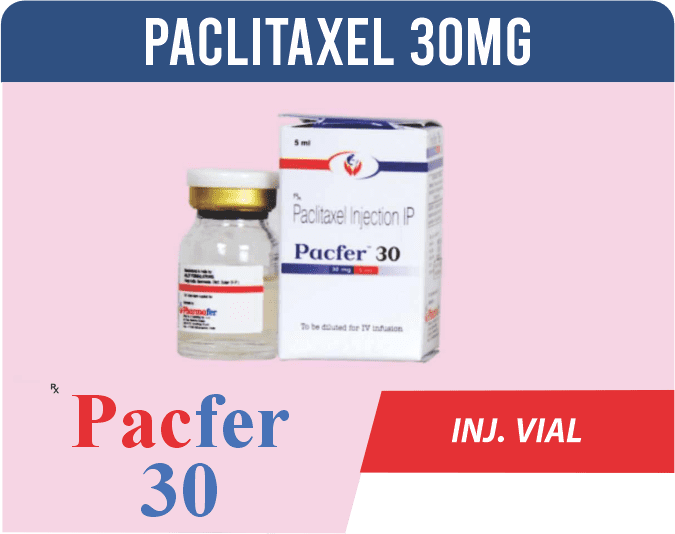
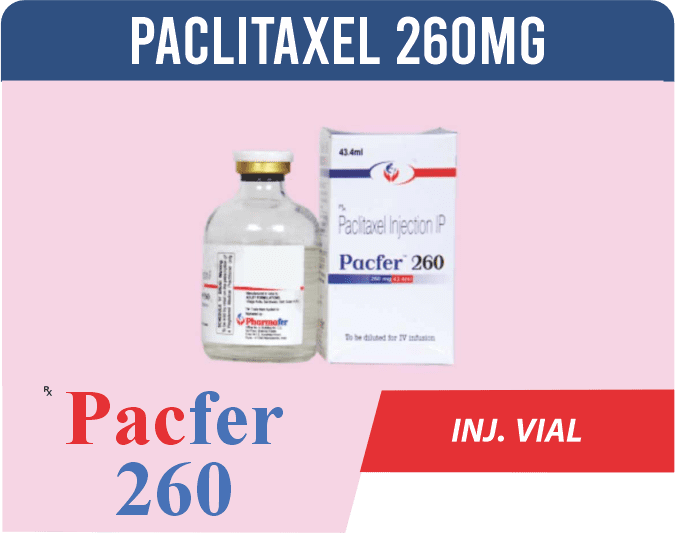
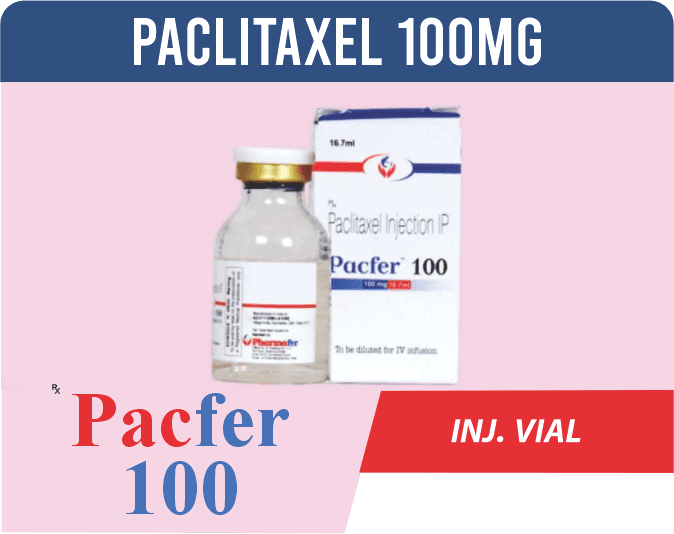
PACFER – Paclitaxel Injection 30 mg / 100 mg / 260 mg
Product Overview
PACFER (Paclitaxel Injection) is a sterile injectable anticancer medicine containing Paclitaxel, a member of the taxane class of chemotherapy agents. It is indicated for the treatment of various malignancies, including breast cancer, ovarian cancer, non-small cell lung cancer (NSCLC), and AIDS-related Kaposi’s sarcoma, as determined by the treating oncologist.
Paclitaxel works by stabilizing microtubules within cancer cells, preventing normal cell division and ultimately leading to cancer cell death. PACFER is administered by intravenous infusion under the supervision of qualified healthcare professionals in hospitals and oncology centers.
| Attribute | Details |
|---|---|
| Brand Name | PACFER |
| Generic Name | Paclitaxel Injection |
| Available Strengths | 30 mg / 100 mg / 260 mg |
| Dosage Form | Injection Concentrate for Intravenous Infusion |
| Packaging | Single-Dose Vials |
| Therapeutic Category | Anticancer / Taxane Chemotherapy Agent |
| Route of Administration | Intravenous (IV) Infusion |
| Prescription Status | Prescription Medicine |
| Manufacturer | Pharmafer Pvt. Ltd. |
| Storage | Store below 25°C. Protect from light. Do not freeze. |
Uses of PACFER
Key Uses
PACFER is indicated for the treatment of:
- Breast cancer
- Ovarian cancer
- Non-Small Cell Lung Cancer (NSCLC)
- AIDS-related Kaposi’s sarcoma
- Other malignancies as recommended by the treating oncologist
PACFER may be administered alone or in combination with other anticancer medicines depending on the treatment protocol.
Benefits
Proven Chemotherapy Agent
Paclitaxel is a well-established chemotherapy medicine used in the treatment of multiple solid tumors.
Broad Oncology Applications
Indicated for several common cancers including breast, ovarian, and lung cancers as part of evidence-based treatment protocols.
Microtubule Stabilization
Inhibits cancer cell division by stabilizing microtubules, thereby slowing tumour growth.
Multiple Strength Options
Available in 30 mg, 100 mg, and 260 mg presentations to support individualized dosing requirements.
Reliable Oncology Formulation
Manufactured according to stringent pharmaceutical quality standards for hospital and oncology use.
Possible Side Effects
Like all chemotherapy medicines, PACFER may cause side effects, although not every patient experiences them.
Common side effects include:
- Hair loss (alopecia)
- Nausea and vomiting
- Fatigue
- Low white blood cell count (neutropenia)
- Anemia
- Peripheral neuropathy (numbness or tingling in the hands and feet)
- Muscle or joint pain
- Mouth sores
- Temporary changes in liver function tests
Patients should seek immediate medical attention if they experience fever, severe allergic reactions, breathing difficulty, or signs of infection.
Mechanism of Action
Paclitaxel promotes the assembly and stabilization of microtubules, preventing their normal breakdown during cell division. This disrupts mitosis, leading to inhibition of cancer cell proliferation and programmed cell death (apoptosis). As rapidly dividing cells are particularly affected, Paclitaxel is an important component of chemotherapy regimens for several cancers.
Dosage & Administration
PACFER should be administered only under the supervision of a qualified oncologist or trained healthcare professional. It is given as an intravenous infusion, and the dosage is determined according to the patient’s body surface area, cancer type, clinical condition, and treatment protocol. Premedication may be prescribed to reduce the risk of hypersensitivity reactions. Patients should be closely monitored throughout treatment, with regular assessment of blood counts and overall clinical status.
Frequently Asked Questions
PACFER is used in the treatment of breast cancer, ovarian cancer, non-small cell lung cancer, and certain other cancers as prescribed by an oncologist.
PACFER contains Paclitaxel, which stabilizes microtubules inside cancer cells, preventing them from dividing and multiplying.
PACFER is administered as an intravenous infusion by qualified healthcare professionals in a hospital or oncology center.
Yes. Your doctor may prescribe medicines before the infusion to reduce the risk of allergic or hypersensitivity reactions.
Yes. Blood counts, liver function, and overall treatment response are routinely monitored throughout chemotherapy.