
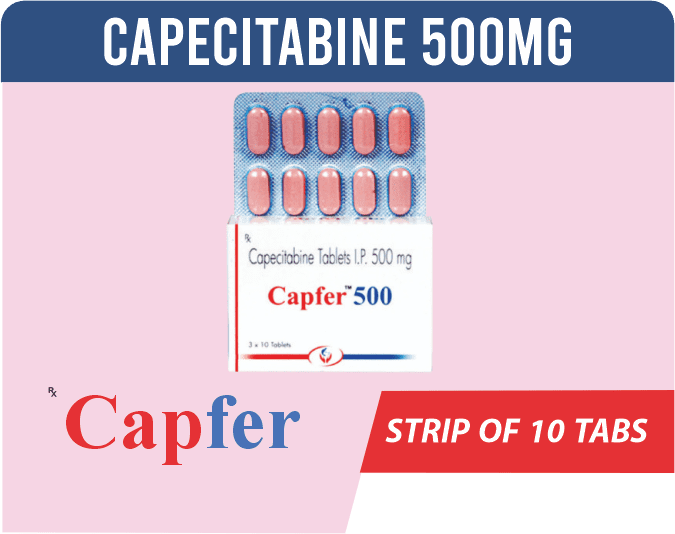
CAPFER –Capecitabine Tablets IP 500 mg
Product Overview
CAPFER (Capecitabine Tablets IP 500 mg) is an oral anticancer medicine used in the treatment of certain types of cancer, including colorectal cancer, breast cancer, and gastric cancer, as prescribed by an oncologist. Capecitabine is a fluoropyrimidine carbamate that is converted in the body into 5-fluorouracil (5-FU), which interferes with cancer cell growth and replication. It is commonly used alone or in combination with other chemotherapy medicines as part of individualized cancer treatment protocols.
| Attribute | Details |
|---|---|
| Brand Name | CAPFER |
| Generic Name | Capecitabine Tablets IP |
| Strength | 500 mg |
| Dosage Form | Film-Coated Tablets |
| Packaging | 3 × 10 Tablets |
| Therapeutic Category | Anticancer / Antineoplastic |
| Route of Administration | Oral |
| Manufacturer | Pharmafer Pvt. Ltd. |
| Storage | Store below 30°C in a cool and dry place. Protect from moisture. |
Uses of CAPFER
CAPFER is prescribed for the treatment of:
- Colorectal cancer
- Metastatic colorectal cancer
- Breast cancer
- Advanced gastric cancer (as part of combination therapy)
- Other cancers as determined by the treating oncologist
It should only be used under the supervision of a qualified oncology specialist.
Benefits
Why Choose CAPFER?
Oral Chemotherapy
Provides an effective oral alternative to certain intravenous chemotherapy regimens.
Targeted Activation
Capecitabine is converted into its active form preferentially within tumour tissues, helping deliver chemotherapy where it is needed.
Proven Clinical Effectiveness
Widely used worldwide in the treatment of colorectal and breast cancers according to established oncology treatment protocols.
Flexible Treatment Option
Can be prescribed as monotherapy or in combination with other anticancer medicines depending on the patient’s treatment plan.
Convenient Administration
Film-coated tablets provide convenient oral dosing, reducing the need for frequent hospital visits for intravenous administration.
Possible Side Effects
Like all chemotherapy medicines, CAPFER may cause side effects. Commonly reported effects include:
- Nausea
- Vomiting
- Diarrhea
- Loss of appetite
- Fatigue
- Hand-foot syndrome (redness, pain, or peeling of the palms and soles)
- Mouth sores (stomatitis)
- Decreased blood cell counts
- Increased risk of infections
Patients should report severe diarrhea, fever, unusual bleeding, or persistent symptoms to their healthcare provider immediately.
Mechanism of Action
Capecitabine is a prodrug that is metabolized into 5-fluorouracil (5-FU) after absorption. The active metabolite interferes with DNA synthesis and cell division, helping slow or stop the growth of rapidly dividing cancer cells.
Dosage & Administration
- Take only as prescribed by your oncologist.
- Swallow tablets whole with water.
- Usually taken within 30 minutes after a meal.
- The dose depends on body surface area, cancer type, and treatment protocol.
- Do not alter or discontinue treatment without consulting your doctor.
Frequently Asked Questions
CAPFER is used in the treatment of colorectal cancer, breast cancer, gastric cancer, and certain other cancers as prescribed by an oncologist.
CAPFER should be taken exactly as prescribed, usually within 30 minutes after food with a glass of water.
Yes. Since it is an oral chemotherapy medicine, patients may take it at home according to the treatment schedule provided by their oncologist.
Yes. Your doctor may monitor blood counts, liver function, and kidney function throughout treatment.
Depending on the cancer type and stage, CAPFER may be prescribed alone or in combination with other anticancer medicines.
