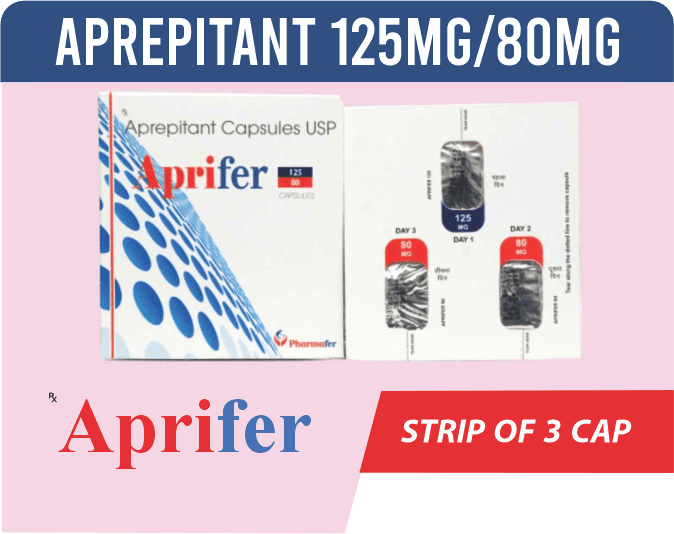
Aprifer – Aprepitant Capsules 125 mg / 80 mg

Product Overview

APRIFER (Aprepitant Capsules 125 mg / 80 mg) is an oral NK1 (Neurokinin-1) receptor antagonist indicated for the prevention of chemotherapy-induced nausea and vomiting (CINV) associated with highly and moderately emetogenic chemotherapy regimens.

APRIFER works by blocking the action of Substance P, a naturally occurring neuropeptide involved in triggering nausea and vomiting. It is commonly used as part of combination antiemetic therapy to improve patient comfort and treatment adherence during chemotherapy.

AttributeDetails
Brand NameAPRIFER
Generic NameAprepitant Capsules
Strength125 mg / 80 mg
Dosage FormHard Gelatin Capsules
Packaging3-Capsule Therapy Pack (1 × 125 mg + 2 × 80 mg)
Therapeutic CategoryAntiemetic / NK1 Receptor Antagonist
Route of AdministrationOral
ManufacturerPharmafer Pvt. Ltd.
StorageStore below 30°C in a cool, dry place. Protect from moisture.

Uses of Aprifer

APRIFER is indicated for:

  • Prevention of chemotherapy-induced nausea and vomiting (CINV)
  • Prevention of delayed nausea and vomiting associated with highly emetogenic chemotherapy
  • Prevention of nausea and vomiting associated with moderately emetogenic chemotherapy
  • May be prescribed as part of combination antiemetic therapy according to oncology treatment protocols

Benefits

Effective Prevention of Chemotherapy-Induced Nausea

Helps reduce both acute and delayed nausea and vomiting associated with cancer chemotherapy.

Targeted NK1 Receptor Blockade

Blocks Substance P from activating NK1 receptors, helping prevent nausea and vomiting before symptoms develop.

Improved Patient Comfort

Supports better treatment tolerance, helping patients complete chemotherapy with greater comfort.

Convenient Oral Administration

Supplied as an oral capsule therapy pack for use according to the prescribed chemotherapy schedule.

Established Supportive Oncology Care

Widely used as an important component of modern antiemetic regimens in oncology practice.

Possible Side Effects

Like all medicines, APRIFER may cause side effects, although not everyone experiences them.

Common side effects include:

  • Headache
  • Constipation
  • Indigestion
  • Fatigue
  • Loss of appetite
  • Hiccups
  • Dizziness

Patients should consult their healthcare provider if side effects persist or become severe.

Mechanism of Action

APRIFER contains Aprepitant, a selective Neurokinin-1 (NK1) receptor antagonist. It works by blocking the action of Substance P, a neurotransmitter involved in triggering nausea and vomiting. By inhibiting NK1 receptors in the central nervous system, APRIFER helps prevent both acute and delayed chemotherapy-induced nausea and vomiting.

Dosage & Administration

  • Take only as prescribed by your oncologist.
  • May be taken with or without food.
  • Usually administered according to a chemotherapy cycle as part of a multi-day antiemetic regimen.
  • Follow the prescribed schedule carefully for optimal effectiveness.
  • Do not discontinue therapy without consulting your healthcare provider.

Frequently Asked Questions

1What is APRIFER used for?

APRIFER is used to prevent nausea and vomiting caused by chemotherapy in cancer patients.

2How does APRIFER work?

APRIFER blocks NK1 receptors in the brain, preventing the action of Substance P, which triggers nausea and vomiting.

3Can APRIFER be taken with food?

Yes. APRIFER may be taken with or without food as directed by your healthcare provider.

4Is APRIFER a chemotherapy medicine?

No. APRIFER is not a chemotherapy medicine. It is an antiemetic used as supportive care to help prevent chemotherapy-induced nausea and vomiting.

5Should APRIFER be taken on every chemotherapy cycle?

Your oncologist will determine the appropriate antiemetic regimen based on your chemotherapy protocol and individual treatment needs.